
Product Standards
Product Standards
Kitchen appliances chosen for real everyday routines.
At KitchNexa, product standards begin with practical kitchen use. We focus on countertop appliances that make sense for preparation, cooking, beverage routines, cleanup and the space they occupy when the day is done.
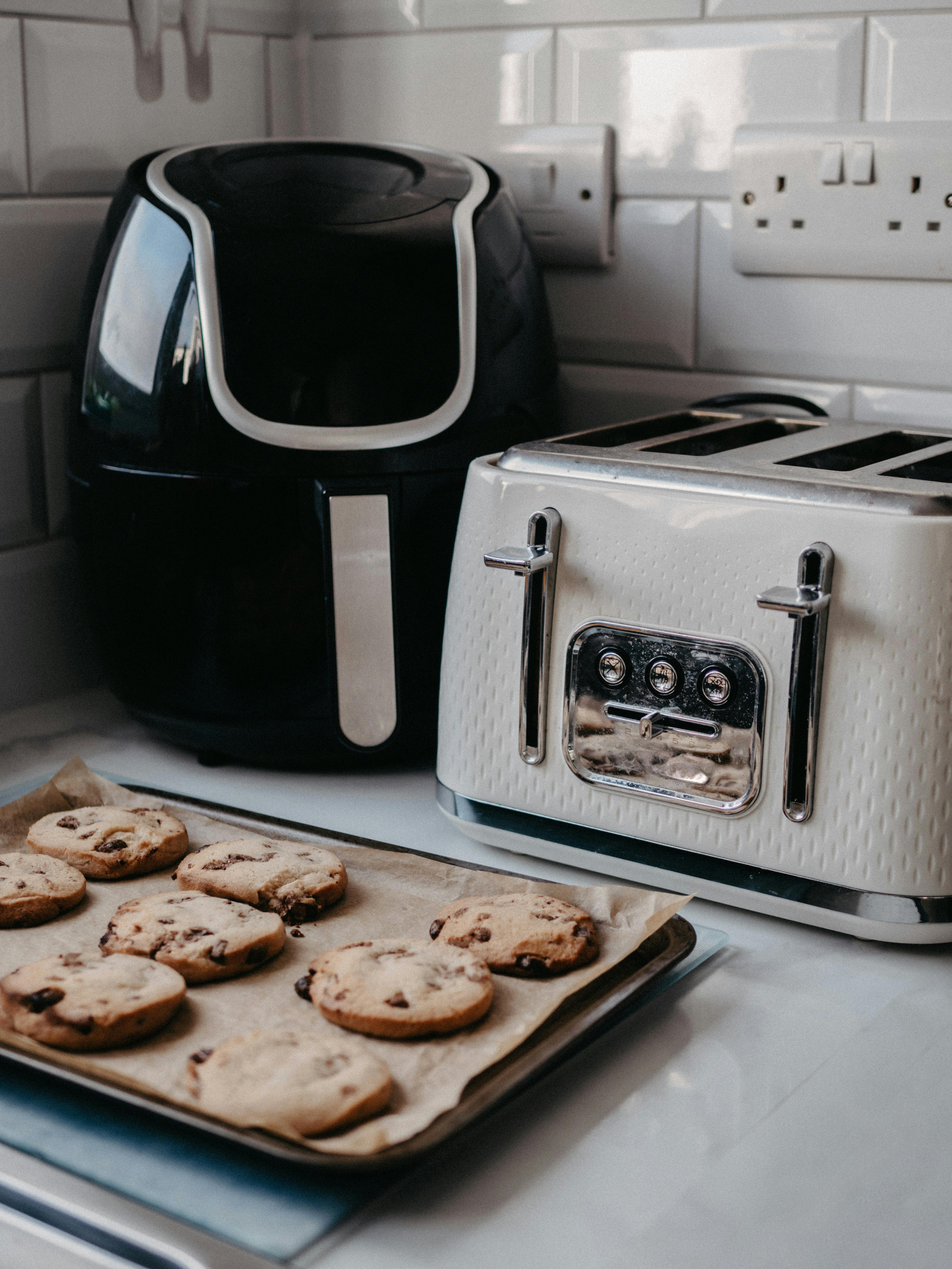
The KitchNexa Approach
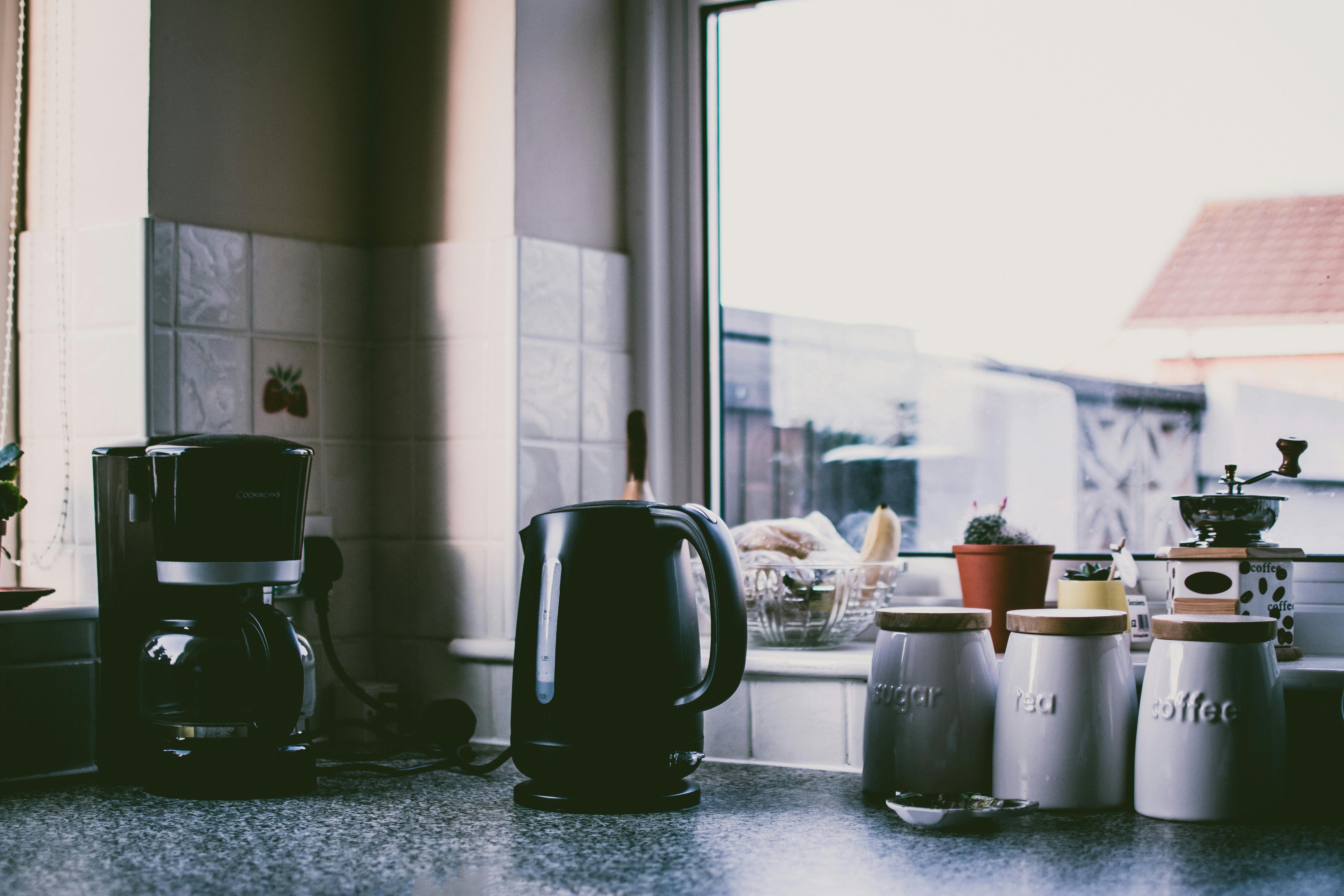
Standards built around how an appliance earns its place on the counter.
A kitchen appliance is more than a feature list. Its value is shaped by how easily it fits into a routine: loading ingredients, setting controls, monitoring progress, serving, cleaning removable parts and storing the appliance without creating unnecessary friction.
Core Standards
Four practical checks guide our product perspective.
The goal is not to add complexity. It is to make everyday cooking, food preparation and beverage routines easier to understand and easier to manage.
Useful capacity
Capacity should match the meals, drinks or ingredient batches you actually prepare, rather than simply maximizing size.
Intuitive operation
Controls, lids, baskets, jars, doors and removable components should support the appliance's core workflow without unnecessary steps.
Countertop awareness
Width, depth, height, lid clearance, door swing and access to controls all matter when planning a usable kitchen setup.
Practical care
Routine cleaning should be considered alongside daily use, including food-contact surfaces, removable pieces and areas that collect residue.

Food Preparation
A preparation appliance should simplify the path from ingredient to bowl.
For blenders and food processors, we look at the full working sequence: adding ingredients, securing the jar or bowl, selecting an appropriate function, pouring or removing prepared food and cleaning the parts that contact ingredients.
- 01Choose jar or bowl capacity around realistic batch sizes.
- 02Consider access to lids, feed chutes, blades and removable accessories.
- 03Keep enough working room around the appliance for loading and serving.

Beverage Routine
Small details shape the morning routine.
For electric kettles, coffee makers and coffee grinders, everyday usability includes filling, measuring, pouring, refilling, wiping surfaces and keeping the surrounding prep area organized.
- 01Match water, bean or ground-coffee capacity to your usual serving pattern.
- 02Plan for lid opening, carafe removal, cord position and easy access to controls.
- 03Keep cleaning routines straightforward so the appliance is ready for the next use.
Category Perspective
Different appliance types need different practical questions.
The same standard does not fit every appliance. A compact oven, an air fryer and a kettle interact with the kitchen in different ways.
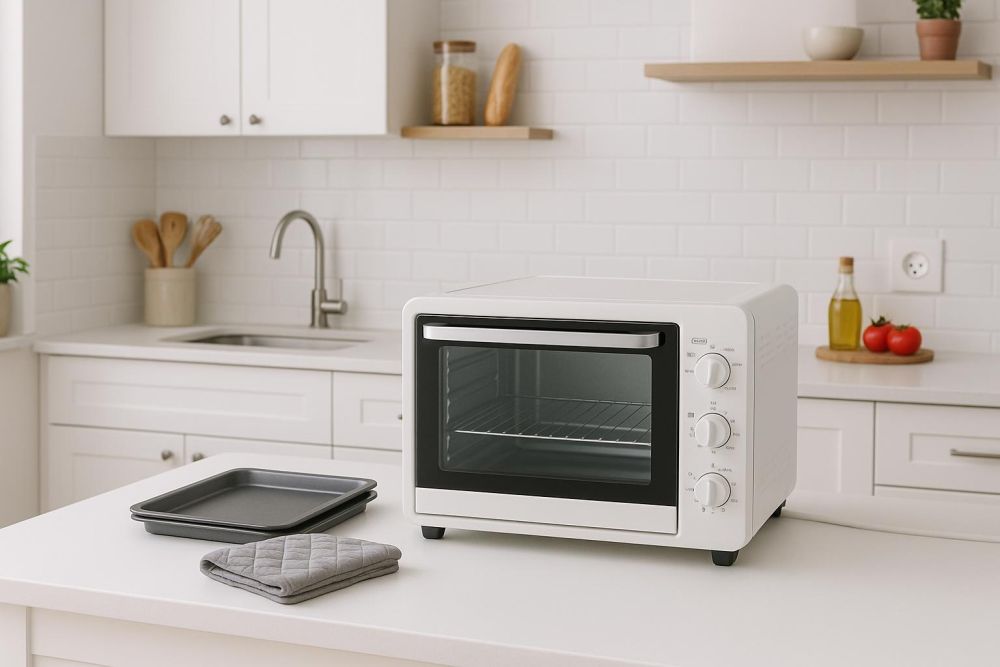
Countertop Cooking
Air Fryers and Electric Ovens
Look beyond cooking modes. Basket or tray access, usable chamber size, ventilation space, door clearance and cleanup all affect how the appliance works in a real kitchen.
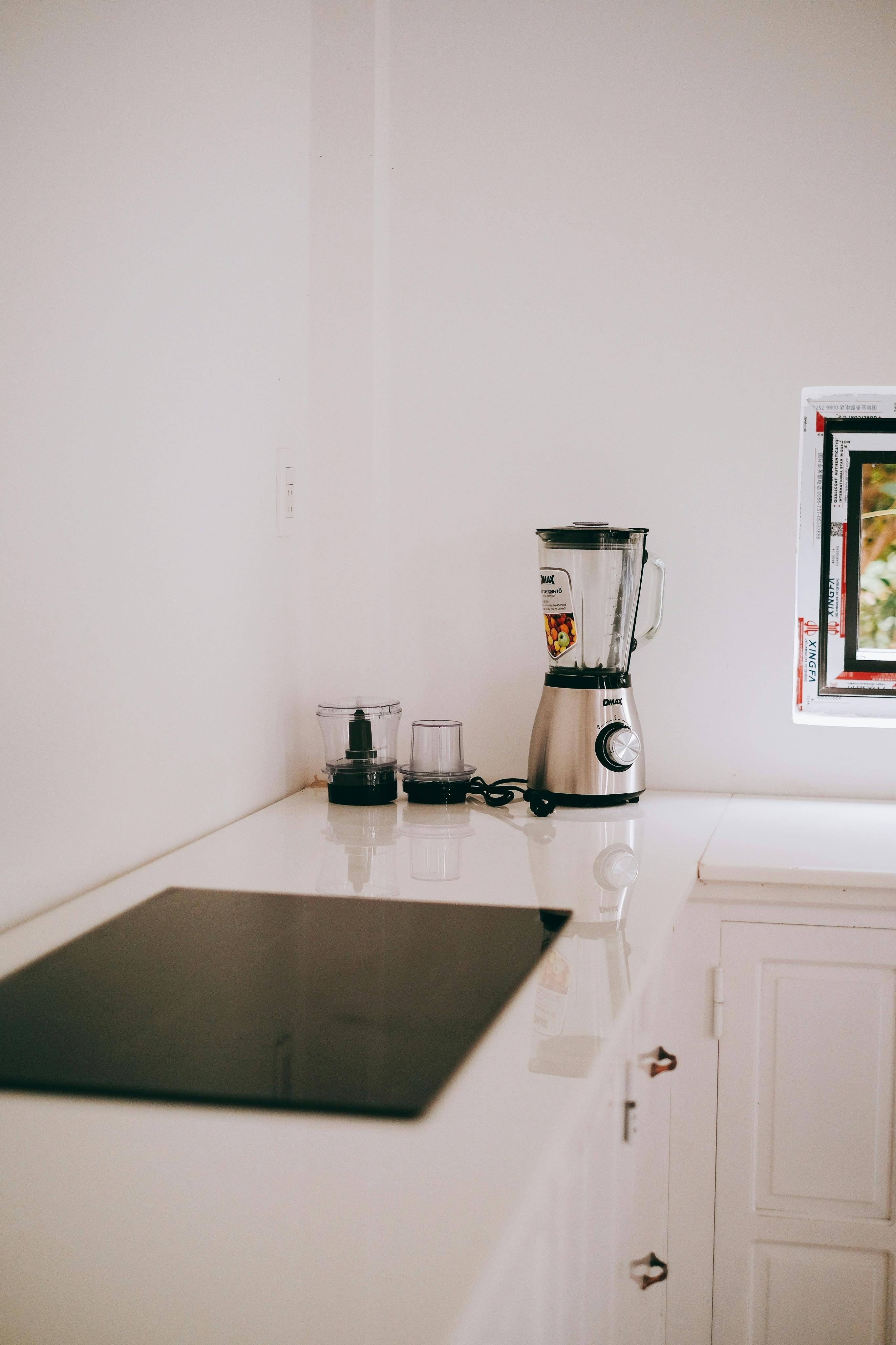
Food Preparation
Blenders and Food Processors
Think in terms of batch size, ingredient type, vessel handling and cleanup. A useful preparation appliance should fit the way ingredients move through your routine.
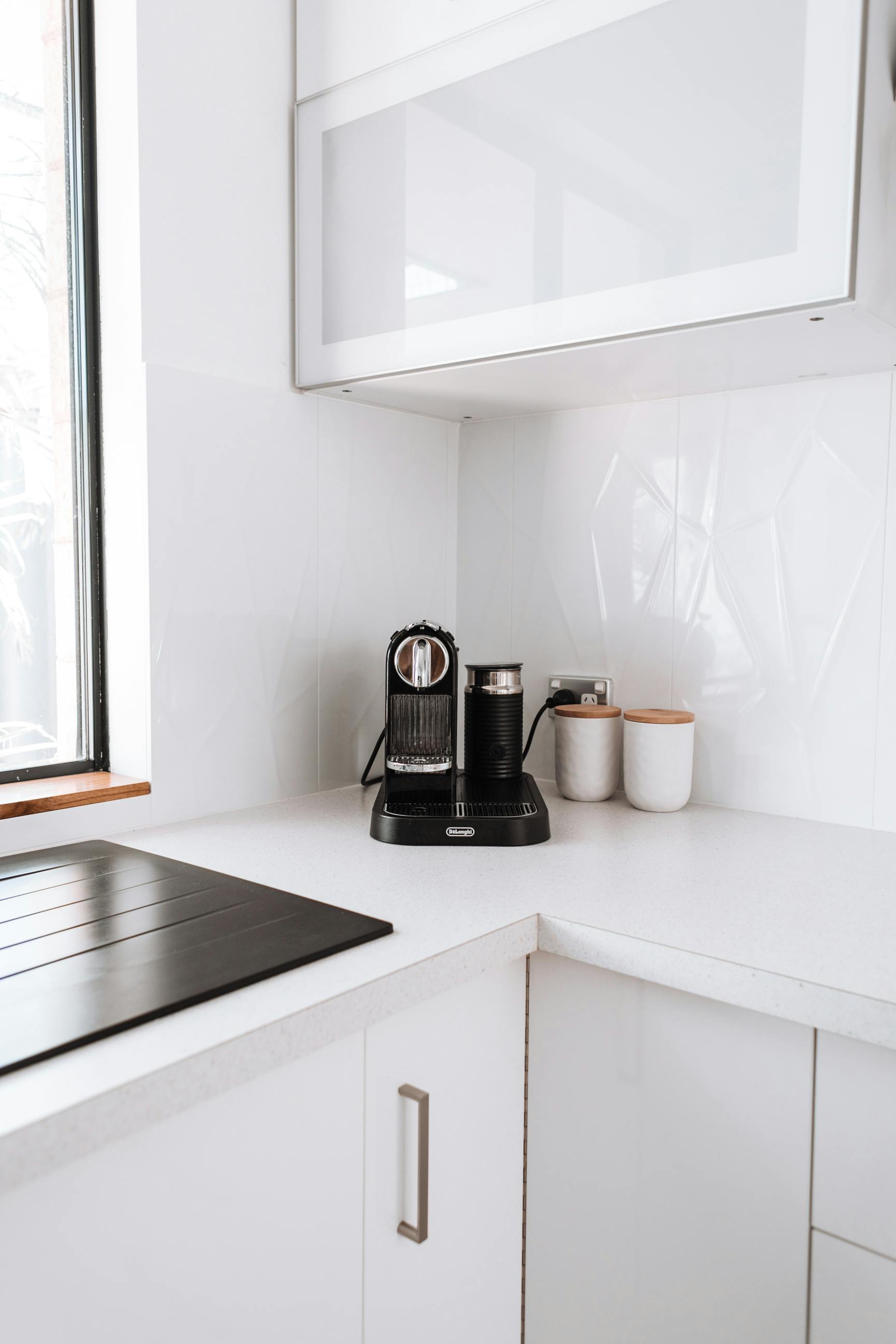
Beverage Preparation
Kettles, Coffee Makers and Grinders
Daily beverage appliances benefit from clear filling access, comfortable pouring, sensible serving capacity and simple cleaning around water, coffee grounds and removable parts.
Specifications in Context
Numbers matter most when they explain real use.
Capacity, dimensions and included components are most helpful when they answer practical questions about portions, countertop space, access and cleanup.
Capacity
Consider the amount you normally cook, blend, chop, boil or brew in one session.
Footprint
Check width and depth together with the usable work surface around the appliance.
Clearance
Account for lid opening, basket removal, door swing, controls and the manufacturer's placement guidance.
Accessories
Focus on components that support the tasks you actually perform instead of collecting unused extras.
Care
Review how removable parts, food-contact surfaces and appliance exteriors should be cleaned after use.
Evaluation Flow
A straightforward way to compare everyday appliances.
Start with the task
Define what you want to air fry, blend, chop, boil, brew, grind, bake or cook most often.
Size the routine
Compare capacity to real serving sizes, ingredient batches and how frequently you prepare them.
Measure the space
Plan the countertop footprint, storage location and access needed for lids, baskets, jars or doors.
Plan the reset
Consider how you will empty, wash, wipe, dry and store the appliance after routine use.
Care and Ownership
Product standards continue after the first use.
Always follow the instructions provided with the specific appliance. Care methods, removable parts and placement requirements can vary by model.
Before use
Set up the appliance around its real working space.
Allow room for loading, opening, pouring or removing hot food without crowding nearby preparation areas.
After use
Clean food-contact areas before residue becomes routine.
Remove crumbs, oils, grounds, splashes and ingredient residue according to the appliance instructions and material requirements.
Between uses
Store accessories so the next setup stays simple.
Keep jars, lids, baskets, trays, grinder containers and other working pieces together when practical.
Need a Second Look?
Use the product details to compare the appliance with your kitchen routine.
If you have a question about choosing between appliance types, capacity, countertop fit or general product information, KitchNexa support is available to help you navigate the options.
Store Information
KitchNexa support and order information.
Shipping
3–5 business days
Phone
(941) 840-0058Address
3311 SALMON ST, Sachse TX 75048
Thoughtful appliance selection
Product information is presented around practical kitchen use and everyday routines.
Clear support path
Use the contact page when you need help with product or order questions.
Everyday kitchen focus
Our categories stay centered on useful countertop cooking, preparation and beverage appliances.